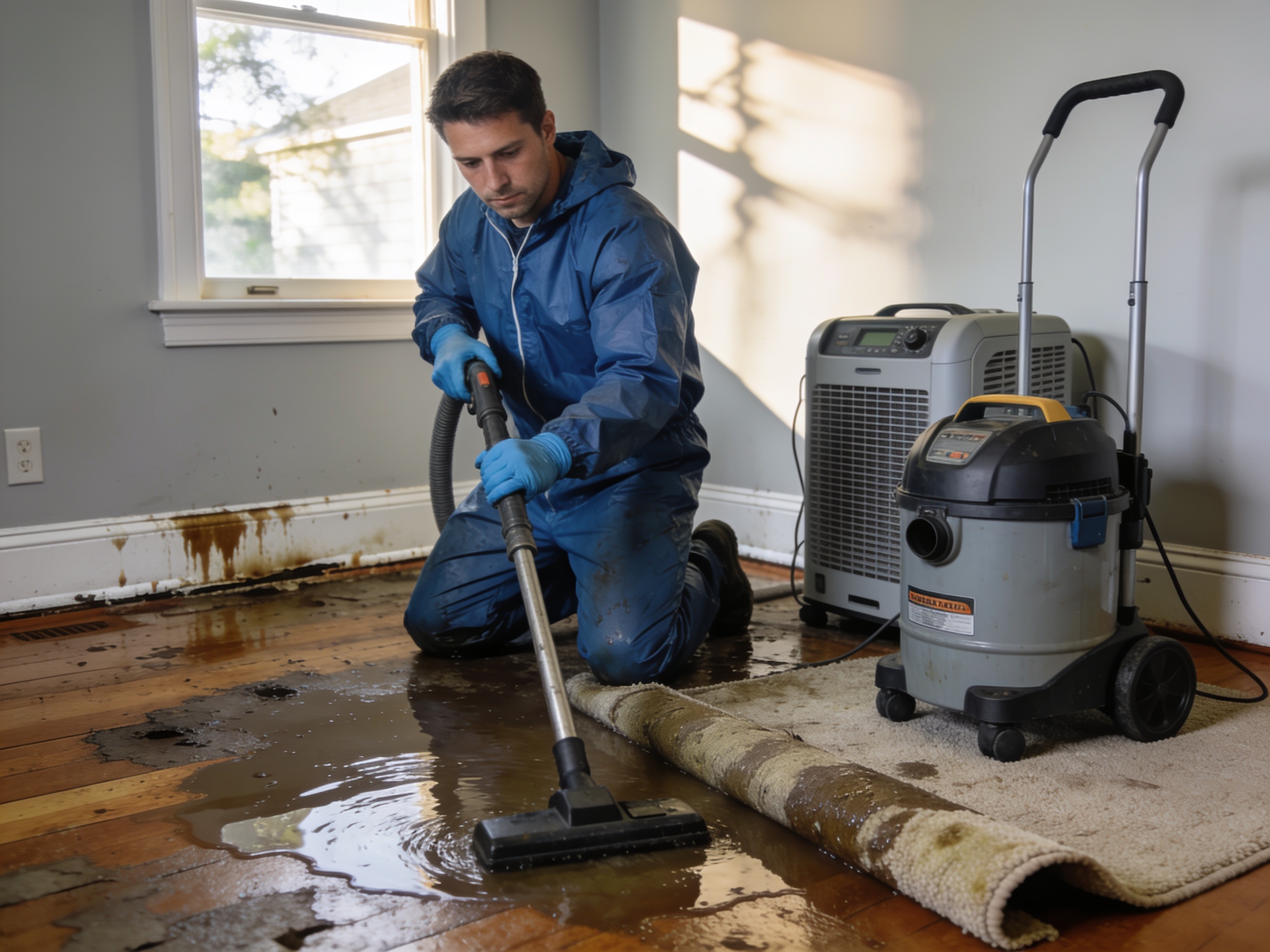
Winston-Salem's humid subtropical climate brings hot summers that speed mold growth after any water intrusion, especially in older brick and frame homes found in Old Salem, Waughtown and West End. Properties near Truist Stadium or Winston-Salem State University often sit on clay-heavy soils that hold moisture longer, forcing technicians to pull baseboards and use moisture meters deep into crawl spaces and subfloors. Mild winters still allow pipe bursts during cold snaps, and the proximity to Greensboro means crews sometimes handle overflow calls when storms track through Forsyth County. Proper drying prevents hidden rot in lath-and-plaster walls common to Reynolda-area houses.
Extraction begins with truck-mounted pumps to remove standing water before it reaches hardwood floors or drywall in Ardmore bungalows. Technicians then place industrial air movers and dehumidifiers calibrated for local humidity levels, running them until readings drop below 12 percent moisture content. In historic districts like Old Salem, care is taken to avoid damaging original woodwork while still reaching wall cavities. Sewage backups from aging municipal lines require full PPE and antimicrobial treatment before any reconstruction starts.
Final restoration includes replacing saturated insulation, reinstalling trim, and applying antimicrobial coatings where needed. Homeowners in Downtown Winston-Salem frequently request documentation for insurance claims after heavy rain events. Work is scheduled around business hours at 4447-A Wallburg Rd, with crews available Monday through Friday 8am to 6pm and Saturday 9am to 2pm.
Technician insight
In Winston-Salem the thing that catches most people out with water damage restoration is how quickly mold sets in during our hot humid summers once water reaches the clay soils under older Ardmore or Reynolda homes; skipping thorough wall cavity drying almost always means a callback within weeks.
Crawl Space Leak in Waughtown
A homeowner noticed musty odors after heavy rain. Inspection found a slow foundation leak saturating insulation under the 1950s home. Crew extracted water, ran drying equipment for four days and replaced affected insulation and vapor barrier. The space tested dry and the odor did not return.
Water Damage Restoration Services We Offer
✓Emergency Water Extraction
Rapid removal of standing water from basements and crawl spaces in Forsyth County homes before it reaches drywall or hardwood.
✓Structural Drying and Dehumidification
Placement of commercial air movers and dehumidifiers to dry wall cavities and subfloors in humid Winston-Salem summers.
✓Mold Prevention After Water Damage
Antimicrobial treatment and moisture control to stop growth in older Ardmore and Waughtown properties during hot months.
✓Drywall and Insulation Replacement
Removal and reinstallation of water-soaked materials in Reynolda and West End homes while preserving original trim where possible.
✓Sewage Cleanup and Sanitation
Full containment and disinfection of contaminated water from municipal line backups common in older Downtown neighborhoods.
✓Carpet and Hardwood Floor Restoration
Extraction, drying and refinishing of flooring affected by leaks in historic Old Salem and surrounding Forsyth County houses.
Water Damage Restoration Cost in Winston-Salem, NC
| Service | Typical Range | What Affects It |
|---|---|---|
| Emergency Water Extraction | $350–$900 | Higher in crawl spaces or when multiple rooms are involved in Waughtown homes. |
| Full Structural Drying | $800–$2,200 | Varies with home size and summer humidity levels in Forsyth County. |
| Drywall And Insulation Replacement | $1,200–$3,500 | Depends on linear footage and whether historic plaster is present. |
| Sewage Backup Sanitation | $600–$1,800 | Includes containment and disposal; increases with contaminated volume. |
Ranges are typical for Winston-Salem, NC and confirmed with an exact written quote before any work starts.
How it works
- 1
On-Site Assessment
Technician inspects affected rooms in the Winston-Salem property, documents moisture levels and notes any historic materials.
- 2
Water Removal
Pumps and vacuums extract standing water from floors and walls before humidity drives deeper damage.
- 3
Drying Phase
Air movers and dehumidifiers run until moisture meters confirm safe levels in subfloors and cavities.
- 4
Restoration Work
Replace damaged drywall, insulation and flooring then apply finishes matched to the home's age and style.
- 5
Final Verification
Post-drying walkthrough with homeowner confirms all areas are dry and ready for normal use.
Pricing
Upfront quotes provided after inspection; final cost depends on water volume, affected materials and access in older homes.