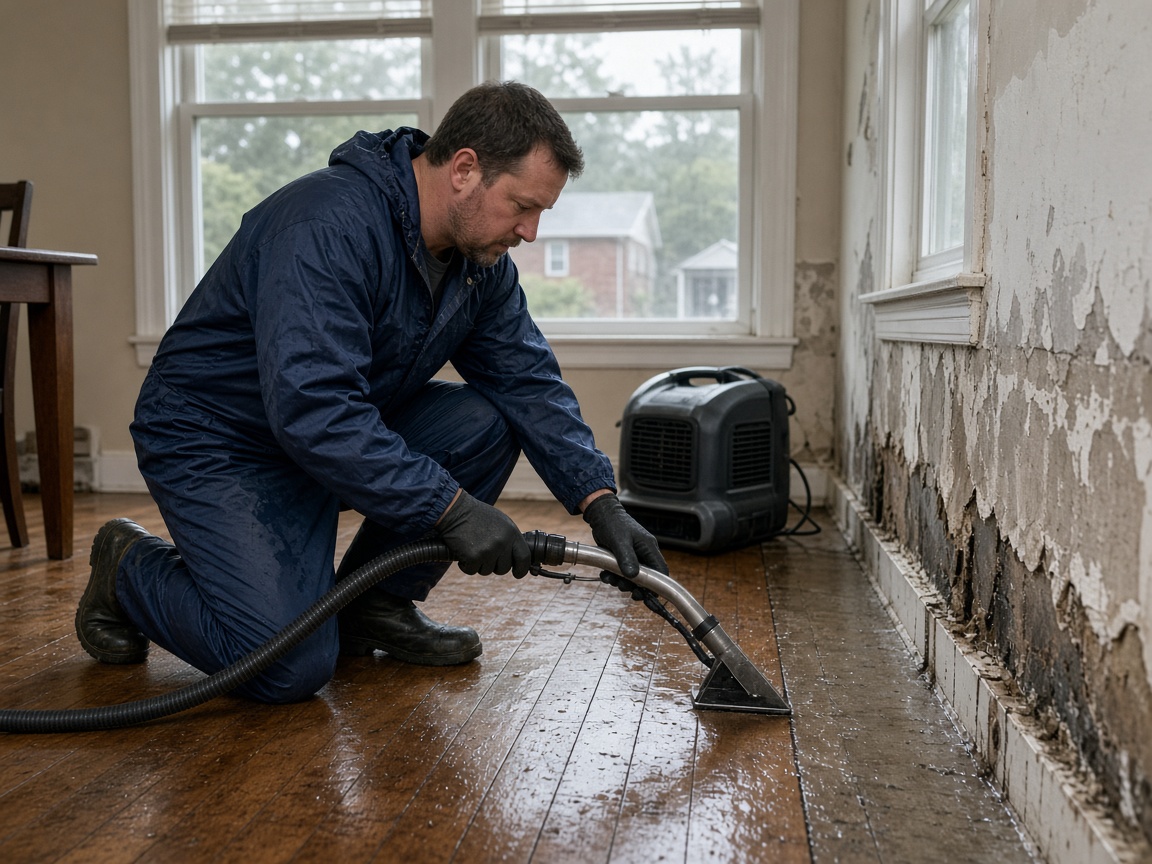
Winston-Salem's humid subtropical climate brings frequent summer storms and occasional winter pipe bursts that push water into older brick and frame homes common in Ardmore and the West End. Moisture travels quickly through lath-and-plaster walls and into crawl spaces beneath houses built before 1960, so restoration crews must pull baseboards and use moisture meters on every affected room rather than stopping at visible wet carpet. Homes near Truist Stadium and along Waughtown often sit on slight slopes where runoff collects against foundations, requiring French-drain checks during every job.
Extraction starts with truck-mounted pumps rated for 200-plus gallons per minute, followed by industrial air movers and dehumidifiers sized for the square footage. In Reynolda and Old Salem properties, crews protect original hardwood floors by placing plastic dams and monitoring relative humidity hourly to prevent cupping. When water reaches drywall, affected sections are cut out 18 inches above the water line per local code to stop hidden mold growth that thrives in Forsyth County's warm, damp air.
Final drying verification uses both pin and pinless meters plus infrared cameras to confirm wall cavities and subfloors are below 12 percent moisture content before reconstruction begins. Jobs that cross into Greensboro city limits still follow the same drying standards but may require extra permits for larger commercial buildings near the county line.
Technician insight
In Winston-Salem the thing that catches most people out with water damage restoration is the way humidity lingers in the crawl spaces of 1940s–1960s homes in Ardmore and the West End; even after surface water is gone, joists and subfloors stay wet for weeks if you skip daily meter checks.
Crawl Space Flood in Waughtown
Heavy rain sent water under a 1950s home near Waughtown. We found saturated insulation and mold on floor joists. Extraction and targeted drying prevented further spread into the living area; new vapor barrier and insulation restored the space.
Water Damage Restoration Service Services We Offer
✓Emergency Water Extraction
Rapid removal of standing water from basements and first floors in Downtown Winston-Salem and Ardmore homes using truck-mounted pumps and portable extractors.
✓Structural Drying and Dehumidification
Placement of commercial air movers and low-grain dehumidifiers to pull moisture from walls, floors and crawl spaces common in older Forsyth County housing stock.
✓Mold Remediation After Water Damage
Containment, HEPA vacuuming and antimicrobial treatment of mold that develops quickly in humid Winston-Salem summers once drywall or insulation stays wet.
✓Carpet and Hardwood Floor Restoration
Cleaning, drying and reinstallation of carpet pads plus sanding and refinishing of original hardwood floors found in West End and Reynolda neighborhoods.
✓Drywall and Insulation Replacement
Removal of water-soaked drywall and insulation followed by new installation and texture matching in homes near Old Salem and Waughtown.
✓Crawl Space Water Damage Repair
Pumping, vapor barrier replacement and joist drying in the elevated crawl spaces typical of pre-1970 houses throughout Winston-Salem.
Water Damage Restoration Service Cost in Winston-Salem, NC
| Service | Typical Range | What Affects It |
|---|---|---|
| Category 1 clean water extraction | $400–$900 | Price rises with square footage and number of rooms. |
| Category 2 gray water job | $800–$1,800 | Includes antimicrobial treatment and extra disposal fees. |
| Full structural drying package | $1,200–$2,800 | Varies by home age and crawl space access in older neighborhoods. |
| Drywall and insulation replacement | $600–$1,500 | Depends on linear feet of wall and material type. |
Ranges are typical for Winston-Salem, NC and confirmed with an exact written quote before any work starts.
How it works
- 1
On-Site Assessment
Technician arrives from the Wallburg Road location, maps all wet materials with moisture meters, and documents affected rooms in neighborhoods such as Ardmore or Reynolda.
- 2
Water Extraction
Standing water is removed first with pumps, then remaining moisture is pulled from carpets, pads and subfloors using portable extractors.
- 3
Drying And Monitoring
Air movers and dehumidifiers run continuously while daily moisture readings track progress until levels return to normal.
- 4
Reconstruction
Damaged drywall, insulation and flooring are replaced and finished to match existing surfaces before final walkthrough.
Pricing
Upfront written quotes after inspection; final cost depends on water category, affected square footage and drying time required.