2026-11-12 · Robert Hayes
How to Check for Hidden Moisture After Heavy Rains Near the Yadkin River
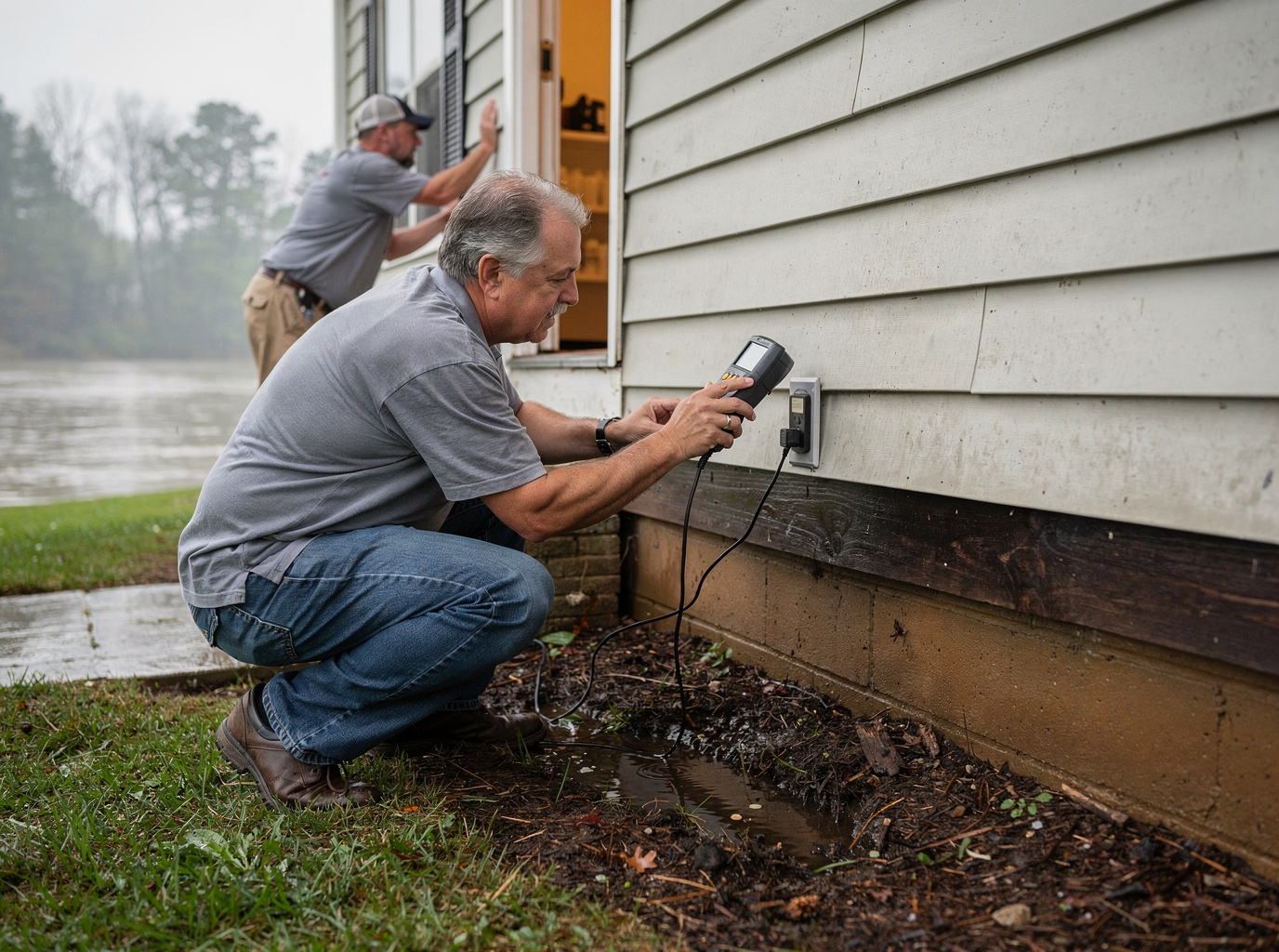
Start by testing walls and floors with a pin-type moisture meter at multiple points, focusing on readings above 15 percent moisture content in homes near the Yadkin River after heavy rains. This direct approach catches saturation that visual inspection misses in Forsyth County properties, where clay-heavy soils hold water longer and push it into foundations during storms.
Testing Walls and Flooring in Older Winston-Salem Homes
Older housing stock in neighborhoods such as Ardmore, West End, and Old Salem often features plaster walls and hardwood floors installed decades ago that absorb water differently than modern materials. After rain events, run the meter along baseboards and up to 24 inches on walls, paying extra attention to areas where rain runoff from Truist Stadium or Reynolda House Museum of American Art drainage patterns directs water toward residential lots. Record readings every 12 inches horizontally; any spike above 18 percent signals trapped moisture that can migrate into subfloors within 48 hours in the region's hot summers.
Inspecting Crawl Spaces and Basements Common to Forsyth County
Many homes in Downtown Winston-Salem and Waughtown sit on crawl spaces with dirt floors and minimal ventilation, conditions that trap humidity after Yadkin River flooding. Enter the space wearing a respirator and shine a light along sill plates and joists, using the moisture meter on wood members at least 6 inches above grade. In mild winters, when temperatures rarely drop below freezing, condensation forms quickly on cold pipes; check for readings over 20 percent and note any musty odor that indicates active wicking from surrounding soil.
Checking Attics and Ceilings After Wind-Driven Rain
Wind-driven rain during summer storms often forces water under shingles and into attics of Reynolda-area homes. Climb into the attic with a flashlight and meter, scanning insulation and roof decking for damp spots, especially near chimneys or vents. Compare readings on north- versus south-facing rafters; differences greater than 5 percent usually trace back to roof leaks that travel along ceiling joists into living spaces below.
For deeper assessment after repeated events, consider professional Water Damage Restoration that includes thermal imaging to locate pockets invisible to meters. Residents in nearby Yadkinville can review local patterns at Yadkinville service details. Homeowners dealing with repeated attic issues may also benefit from reading Inspecting Attics for Leak Damage in Older Winston-Salem Homes After Wind-Driven Rain.
Documenting and Monitoring Moisture Levels Over Time
Create a simple log noting date, location, and meter reading for each test point after every heavy rain. Re-check the same spots 72 hours later; persistent levels above 15 percent confirm hidden moisture that requires extraction rather than air drying alone. In the humid subtropical climate, this timeline prevents secondary damage in areas like Waughtown where older brick foundations retain water against interior framing.