2026-11-12 · Robert Hayes
What to Do When Sump Pumps Fail During Winston-Salem Spring Storms
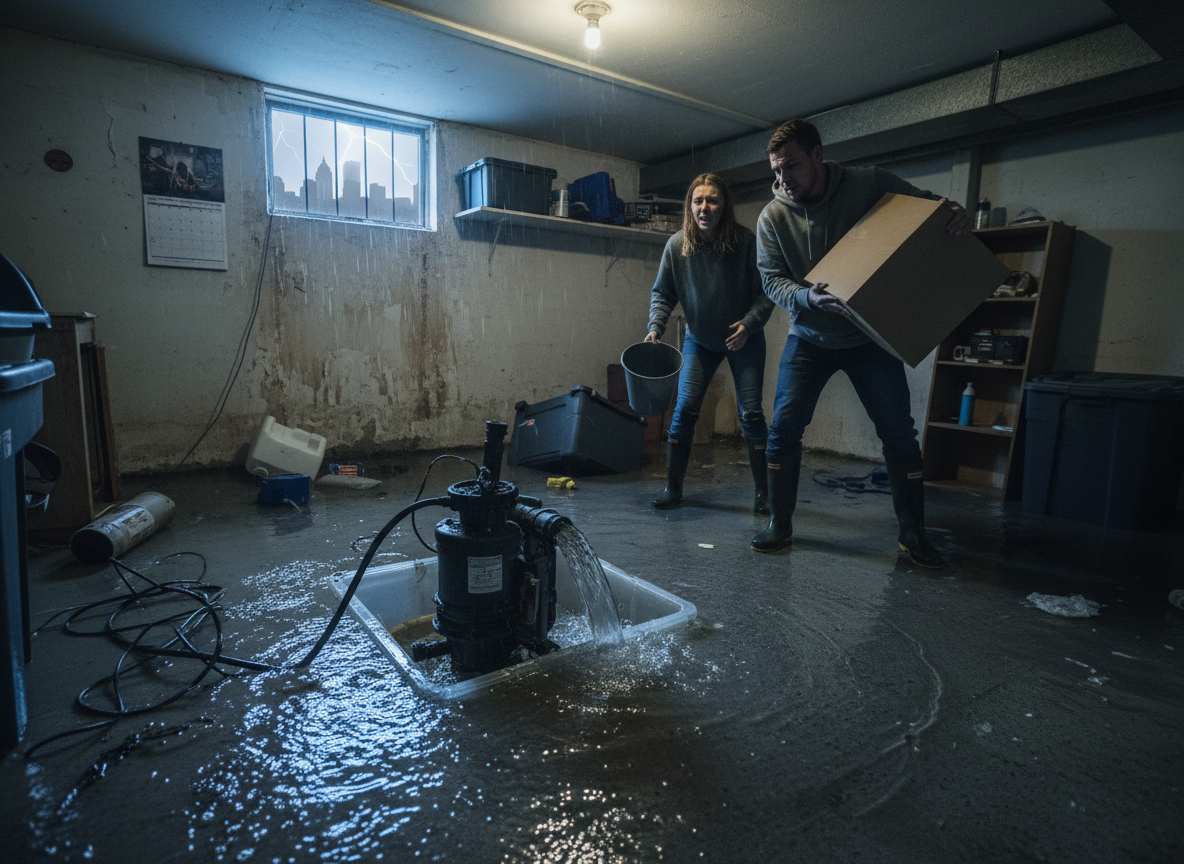
When your sump pump fails during Winston-Salem spring storms, shut off power to the unit within the first 30 minutes and begin manual water removal to prevent basement flooding from reaching walls or electrical outlets. Forsyth County receives frequent heavy spring rains that saturate clay-heavy soils, pushing groundwater into foundations faster than many residential pumps can handle. Homes built before 1970 in areas such as Old Salem and Reynolda commonly have shallow sumps or outdated float switches that stop working after 8–12 years of service. Start by checking the discharge line for clogs caused by debris from nearby construction or fallen leaves, then use a wet-dry vacuum or submersible pump to lower water levels below the slab edge. Document water height with photos before moving furniture or stored items.
Immediate Water Removal Actions
Clear standing water first to reduce the risk of mold growth that begins within 24–48 hours in humid subtropical conditions. Place a garden hose or shop vac hose into the sump pit and direct flow to a safe outdoor drain away from the foundation, especially important on sloped lots in Waughtown or Downtown Winston-Salem where runoff can re-enter crawl spaces. Disconnect the pump from its power source only after water drops below the motor housing. Test the float switch manually by lifting it to confirm it still activates the motor; if it does not click on, replace the switch before the next storm. Keep a battery backup or portable generator ready during March and April when power outages are common along the Yadkin River corridor. These steps limit saturation in floor joists and wall cavities that later require professional drying equipment.
Checking for Hidden Moisture in Local Homes
Older brick and frame houses in the West End and Ardmore often have dirt-floor crawl spaces or partial basements where water migrates under sill plates after pump failure. Use a moisture meter on baseboards and subflooring at multiple points, recording readings above 15 percent as signs of hidden saturation. Pay special attention to areas near Truist Stadium or Winston-Salem State University where older utility lines create low spots that collect runoff. Check the attic only if wind-driven rain accompanied the storm, but focus primary efforts on below-grade spaces. If moisture has reached carpet padding or insulation, remove those materials immediately to prevent odors and structural weakening. Homeowners in nearby Greensboro report similar issues after the same weather systems move through Forsyth County, confirming the pattern of rapid groundwater rise during spring fronts.
Long-Term Prevention for Spring Storms
Install a backup pump with a separate float switch and battery power to cover the 4–6 inch hourly rainfall rates sometimes seen in Winston-Salem. Clean the primary pit and check valves each fall before winter dormancy, then retest in early March. Extend the discharge pipe at least 10 feet from the house and add a check valve to stop backflow during heavy downpours. In neighborhoods like Reynolda, where mature trees drop leaves into yards, add a screened inlet to reduce clogging. Schedule annual electrical inspections of the pump circuit, especially in homes near Wallburg where older wiring can cause intermittent failures. These measures reduce emergency calls during the peak storm months when multiple systems fail across the county at once.
Professional Assessment After Pump Failure
Contact a water damage restoration team if water has contacted finished surfaces or electrical components, or if the home sits on a slope that directs flow toward neighboring properties. Technicians can extract remaining moisture with industrial air movers and dehumidifiers sized for the square footage, then document conditions for insurance purposes. For properties in Wallburg or adjacent areas, crews familiar with local soil types know how quickly water travels under slabs in Forsyth County clay. Follow up by reviewing the related guide on checking for hidden moisture after heavy rains near the Yadkin River to catch issues that appear days later. Proper drying prevents recurring problems that surface during the next storm cycle.